IMPORTANT ANNOUNCEMENT - Local Roots. Expanded Possibilities.
You are leaving Sierra Central Credit Union
Links to non-Sierra Central websites are provided solely as pointers to information that may be useful to SierraCentral.com users. Sierra Central has no control over the content on such websites.
Sierra Central makes no warranties, either express or implied, concerning the content of such linked sites, including the accuracy, completeness, reliability or suitability thereof for any particular purpose, nor does Sierra Central warrant that such site or content is free from any claims of copyright, trademark or other infringement of the rights of third parties or that such site or content is devoid of viruses or other contamination.
Sierra Central does not guarantee the authenticity of documents on the Internet. Links to non-Sierra Central sites do not imply any endorsement of or responsibility for the opinions, ideas, products, information or services offered at such sites, or any representation regarding the content at such sites. The privacy policies of Sierra Central Credit Union do not apply to linked Websites. Please consult the privacy disclosures on such sites for further information.
SIM Swap Fraud: What It Is, Why It's Dangerous, and How to Protect Yourself
You rely on your mobile phone for far more than just calls and texts.
It's often the gateway to your email, social media, bank accounts, and even your identity. That's why SIM swap fraud, also known as SIM hijacking, has become one of the more dangerous forms of identity theft in recent years.
Understanding how SIM swap fraud works and knowing the warning signs can help you protect yourself before serious damage is done.
What is SIM Swap Fraud?
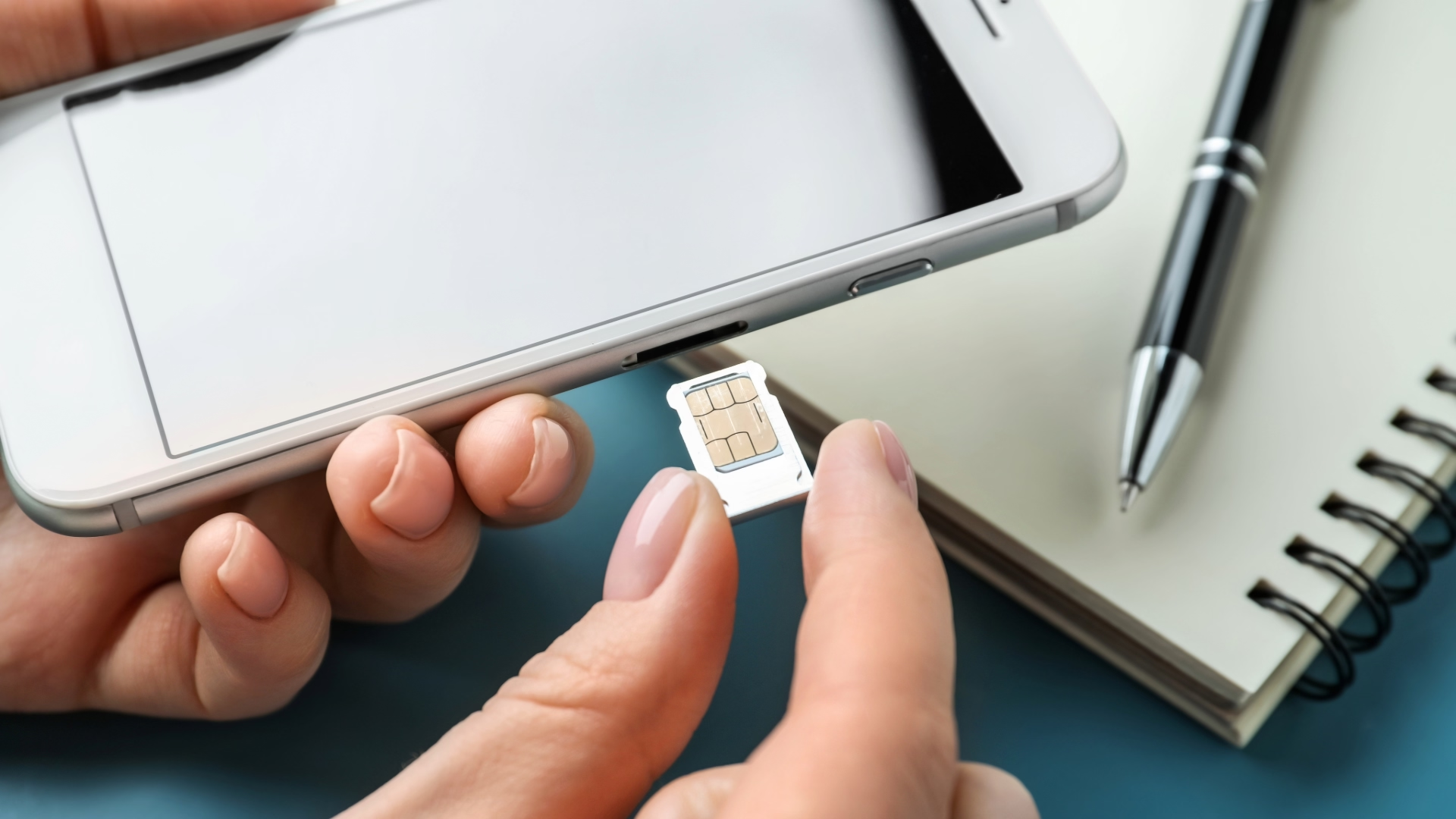
SIM swap fraud occurs when a criminal takes control of your mobile phone number without your permission. Instead of stealing your phone, they manipulate your mobile carrier into transferring your number to a SIM card they control.
Once that happens your phone essentially goes dark, while the attacker receives your calls, texts, and one-time authentication codes instead.
How SIM Swap Fraud Works
Although it can feel alarming, SIM swap fraud usually follows a predictable pattern:
- The attacker gathers personal information: This may come from phishing emails, data breaches, social media profiles, or public records.
- They impersonate you with your mobile carrier: Using the stolen information, the attacker contacts your carrier and claims they need a new SIM card. Often saying their phone was lost or damaged.
- Your number is transferred: If the carrier is convinced, your phone number is moved to a SIM card controlled by the attacker.
- You lose service: Your phone suddenly shows "No Service," while the attacker receives your calls and text messages.
At this point, the attacker doesn't need your phone. They are your phone number.
Why SIM Swap Fraud Is So Dangerous
Many online accounts still rely on SMS text messages for password resets and two-factor authentication (2FA). When an attacker controls your phone number, those security measures stop working in your favor.
With access to SMS codes, criminals can:
- Reset email passwords
- Take over Online Banking or payment apps
- Access social media accounts
- Lock you out of critical services
- Transfer or drain funds in cases
Because everything happens quickly, victims often don't realize what's happening until real damage has already occurred.
Common Signs to Watch For
SIM swap fraud often provides a few warning signs. Taking action immediately can make a big difference.
Be alert if you notice:
- Sudden loss of cell service with no explanation
- Password reset notifications that you didn't request
- Account changes or logins you don't recognize
- Emails or alerts saying your contact information was updated
If multiple signs appear at once, treat it as an emergency,
What to Do If You Suspect a SIM Swap Attack
If your phone unexpectedly loses service and suspicious activity begins:
- Contact your mobile carrier immediately and ask if your SIM card or number was changed
- Secure your financial and email accounts using a trusted device
- Change passwords for affected accounts
- Notify your bank or credit union as soon as possible
- Document everything, including dates, alerts, and conversations
Basic Prevention Tips That Make a Real Difference
While no system is perfect, these steps can significantly reduce your risk.
- Set a PIN or password with your mobile carrier
- This adds a barrier before anyone can make changes to your account
- Limit publicly shared personal information
- Details like our birthday, phone number, or address can be used to impersonate you
- Use app-based or hardware authentication instead of SMS
- Authenticator apps or security keys are far more secure than text messages
- Monitor your accounts regularly
- Early detection is often the difference between a close call and a major loss
Final Thoughts
SIM swap fraud is a reminder that convenience can sometimes come at the cost of security. By understanding how this type of fraud works and taking a few proactive steps, you can greatly reduce our risk and protect your digital life.
Stay informed and prepared is one of the strongest defenses you have.